A good Maui AC maintenance checklist covers two tracks: what you can do yourself as a homeowner, and what requires a licensed technician with the right tools. On Maui, the stakes for skipping regular maintenance are higher than in most places because your system runs year-round with no real off-season. A unit that gets proper attention runs cooler, uses less electricity, and lasts significantly longer than one that’s only looked at when something breaks. At Certified Air Conditioning Maui, we’ve seen what consistent maintenance prevents and what neglect eventually costs. Here’s how to stay ahead of it.
Why a Maui AC Maintenance Checklist Is Different from a Mainland CHecklist
Most air conditioning systems on the mainland get a break in fall and winter. Maui systems don’t. They run in January the same way they run in August, which means wear accumulates continuously without a recovery period between seasons.
Salt air is the other major factor. Properties near the coast, and that includes a large portion of Maui’s residential areas, expose outdoor condenser units and electrical components to a level of corrosion that would be unusual anywhere else. Coil fins corrode faster. Electrical contacts degrade more quickly. Metal components that might last 15 or 20 years in a dry continental climate may need replacement significantly sooner here.
High ambient humidity also creates favorable conditions for mold and mildew growth inside air handlers and ductwork. A system that isn’t cleaned regularly can develop odor problems and air quality issues that no amount of filter changes will address on their own.
Trade wind dust, particularly in Central Maui and Upcountry areas, adds another layer to the problem by loading filters quickly and reducing airflow if cleaning intervals aren’t shortened to match local conditions.
The Homeowner AC Maintenance Checklist for Maui Properties
There are several tasks that most homeowners can handle on their Maui AC maintenance checklist
without tools or technical knowledge, and doing them consistently makes a measurable difference in how a system performs.
The most important is the air filter. Check it every month and replace or clean it before it reaches the point of visible gray buildup. A clogged filter forces the system to work harder, reduces cooling output, and can lead to coil icing.
Check the area around your outdoor condenser unit every few months. Clear away any vegetation, debris, or objects within two feet of the unit on all sides. Airflow restriction at the condenser reduces system efficiency and can cause overheating.
Walk through your home and verify that all supply and return vents are open and unobstructed. Closed vents in unused rooms don’t save energy the way many homeowners assume. They create pressure imbalances that stress the system.
Look at the condensate drain line that runs from your indoor unit to the outside. If you see standing water, a slow drip when the system isn’t running, or water marks near the air handler, the drain line may be partially or fully clogged.
Listen to the system when it starts and runs. Unusual sounds such as rattling, grinding, or a high-pitched whine are early indicators of something that a technician should inspect before it becomes a failure.
How Often to Change AC Filters on Maui
The standard manufacturer recommendation of every 60 to 90 days is a starting point, not a final answer for most Maui properties.
For homes near the coast, in high-traffic households, or in dusty areas like Makawao, Pukalani, or Kahului, monthly filter inspection is more realistic. Replacement every 30 to 45 days is the right baseline for many of these properties.
For ductless mini-split systems, the washable filter inside each indoor head should be removed, rinsed, dried, and reinstalled on the same schedule. Skipping this step is one of the most common reasons ductless systems lose cooling capacity over time.
The Professional AC Tune-Up Checklist: What Certified Air Maui Does on a Service Call
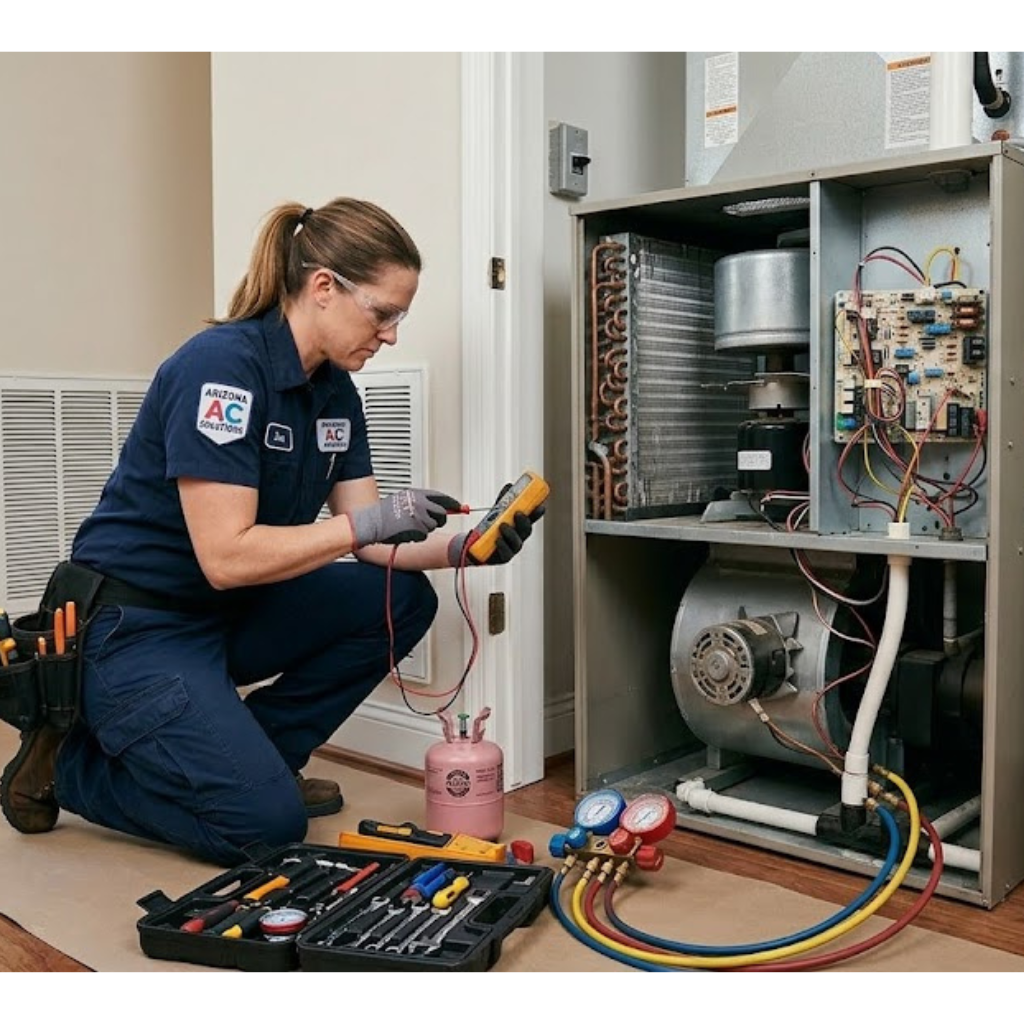
The items a homeowner can manage cover a portion of what keeps an AC system healthy. The remaining tasks require licensed technicians with refrigerant handling certification, electrical testing equipment, and access to components inside the unit.
A full professional AC tune-up service at Certified Air Maui includes inspection and cleaning of the evaporator and condenser coils, refrigerant level check and top-up if needed, electrical connection testing, capacitor inspection, condensate drain line flush, thermostat calibration, lubrication of moving parts, and a full performance test across heating and cooling modes.
Each of these tasks addresses a specific failure mode that shows up regularly in Maui’s climate. A dirty evaporator coil reduces heat absorption. A weak capacitor causes the compressor to struggle at startup.
A partially blocked drain line leads to overflow and water damage. A proper tune-up finds these issues before they turn into AC repair calls.
Seasonal AC Maintenance Schedule for Maui Homeowners
Given Maui’s year-round climate, a season-by-season Maui AC Maintenance Checklist works differently here than it does on the mainland. Think of it in terms of monthly and quarterly tasks rather than spring startup and fall shutdown.
Monthly tasks for the homeowner: check and replace or clean the air filter, visually inspect the outdoor unit for debris, check that all vents are open.
Quarterly tasks: clean washable ductless filters if not already done monthly, inspect the condensate drain line, listen to the system during operation for any change in sound.
Professional service: schedule a full AC tune-up at least once per year. Twice per year is the right choice for properties with continuous operation, older systems, high occupancy, or significant coastal salt exposure. A complete AC maintenance service from Certified Air Maui covers everything on the professional side of this checklist in a single visit.