If you’re researching Maui commercial HVAC systems, you’re probably staring down a decision that affects your budget, your staff, and your customers all at once. A restaurant, an office, and a retail shop don’t cool the same way a house does, and picking the wrong equipment can cost you for years.
At Certified Air Conditioning Maui, we’re a licensed contractor working with commercial and residential equipment across the island. We get calls from business owners who aren’t sure where to start, so let’s walk through the main options and how they compare.
What Counts as a Commercial HVAC System on Maui?
Commercial HVAC covers equipment built to cool larger spaces with heavier use patterns than a typical home. Think longer daily run times, higher occupancy, and often stricter code requirements tied to the building itself.
A home air conditioner cycles on and off around a family’s schedule. A commercial system in a restaurant or retail store might run nonstop for ten or twelve hours a day, seven days a week. That difference alone changes what kind of equipment makes sense.
Maui commercial HVAC systems also tend to involve more than just cooling. Depending on the building, you might need exhaust fans for a kitchen, backflow testing for water lines, or a pump system tied into the building’s mechanical infrastructure.
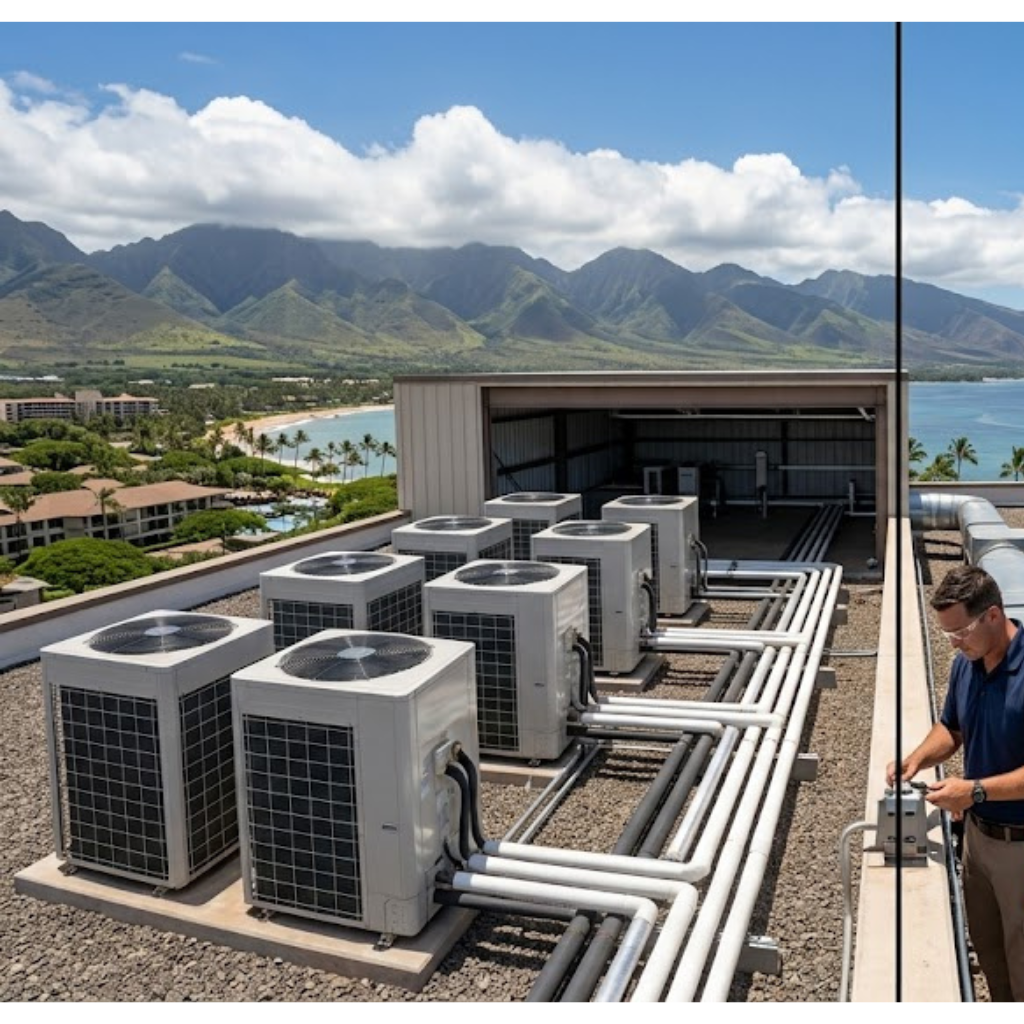
Common Types of Maui Commercial HVAC Systems
Business owners usually land on one of a few equipment categories once they start comparing options. Here’s a breakdown of what’s actually out there.
Packaged Rooftop Units
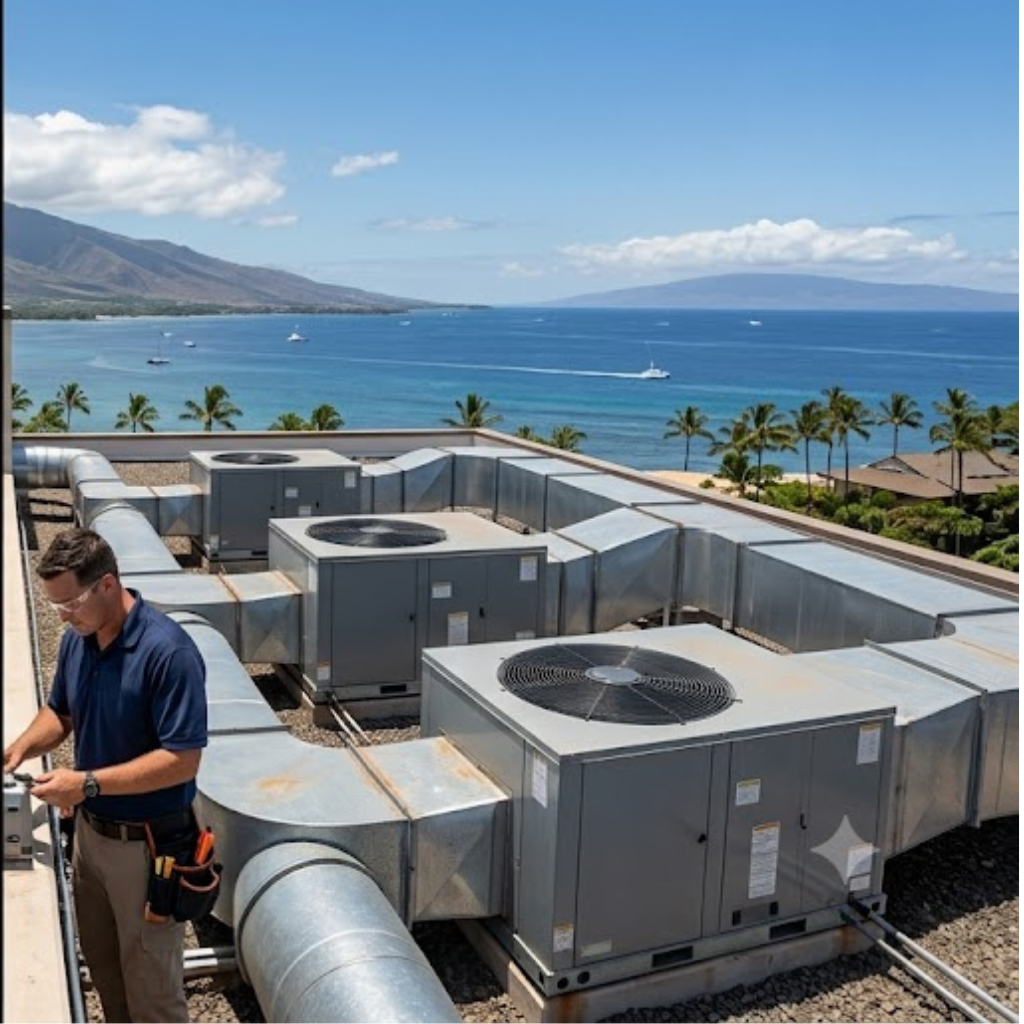
A packaged unit puts the compressor, condenser, and evaporator coil into a single outdoor cabinet, often mounted on the roof. Ductwork runs from that unit into the space below.
This setup works well for standalone retail stores, small offices, and single tenant buildings. It keeps the equipment out of the way, and service access doesn’t require anyone to walk through your storefront.
Chillers and Cooling Towers
Larger buildings, multi tenant properties, or facilities with high cooling demand often need a chiller instead of a packaged unit. A chiller cools water, and that chilled water gets circulated through the building to remove heat.
Cooling towers pair with chillers to reject that heat outside. You’ll typically see chiller and cooling tower setups in bigger commercial properties, not in a single small shop. Certified Air Maui works with reciprocating, centrifugal, and screw chillers, so this option covers a wide range of building sizes.
Commercial vs Residential HVAC on Maui
The comparison between commercial and residential HVAC comes down to scale and duty cycle. A residential system is sized for a house and a handful of occupants. A commercial system has to handle foot traffic, kitchen equipment, computers, and lighting loads that all add heat to the space.
Ductwork looks different too. Commercial buildings often have more zones, more branches, and stricter airflow requirements tied to occupancy codes. A system that’s undersized for a busy restaurant will run constantly and still struggle to keep up.
Maintenance schedules also shift. A home system might get serviced once or twice a year. Commercial equipment running longer hours needs more frequent attention to coils, filters, and belts to avoid a breakdown during business hours.
Downtime hits differently too. A homeowner can usually wait a day or two for a repair. A business losing cooling during service hours can mean lost sales, uncomfortable customers, or a health code issue in a kitchen setting. That’s part of why so many Maui commercial HVAC systems are set up with regular preventive AC maintenance built into the plan from day one.
What Maui’s Climate Means for Commercial Cooling Systems
Salt air is one of the biggest factors business owners overlook when they’re comparing Maui commercial HVAC systems. Outdoor components exposed to ocean air corrode faster than the same equipment inland, and that corrosion shortens the life of coils and cabinets.
Humidity plays a role too. Maui’s warm, humid air means your system isn’t just fighting temperature, it’s also managing moisture. A commercial building that doesn’t control humidity well can end up with mold issues, uncomfortable staff, and complaints from customers.
Ask your contractor about corrosion resistant coatings for coils and cabinets if your building sits near the coast. It’s a smaller cost upfront that protects a much bigger investment over time.
Energy Efficiency and Operating Cost for Commercial HVAC
Longer operating hours mean efficiency matters more for a business than it does for a typical home. A few percentage points of efficiency add up fast when a system runs all day, every day.
Look for ENERGY STAR certified commercial equipment when you’re comparing options. Higher efficiency ratings usually mean a higher price tag upfront, but the savings on your electric bill can offset that difference over the life of the system.
Your building’s insulation, window exposure, and how much heat your equipment generates all factor into how hard your HVAC system has to work. A restaurant kitchen with heavy exhaust needs will have different demands than a quiet office space, even if the square footage is similar.
How to Choose the Right Commercial HVAC System for Your Maui Business
Start with your building. How many square feet are you cooling, and how many people are typically inside during business hours? A packaged unit might handle a small retail space just fine, while a larger property with multiple tenants may need a chiller system instead.
Next, think about your current equipment. If you’re dealing with frequent AC repairs or rising electric bills, that’s often a sign your system is undersized, aging, or poorly matched to how you actually use the space.
Budget matters, but so does total cost over time. A cheaper system that struggles to keep up or breaks down often will cost you more in repairs and lost comfort than a properly sized system from the start.
Certified Air Conditioning Maui works with a wide range of commercial equipment, including packaged units, cooling towers, exhaust fans, heat pumps, and chillers. If you’re ready to talk through what makes sense for your building, reach out to our team and we’ll help you figure out the right path forward.