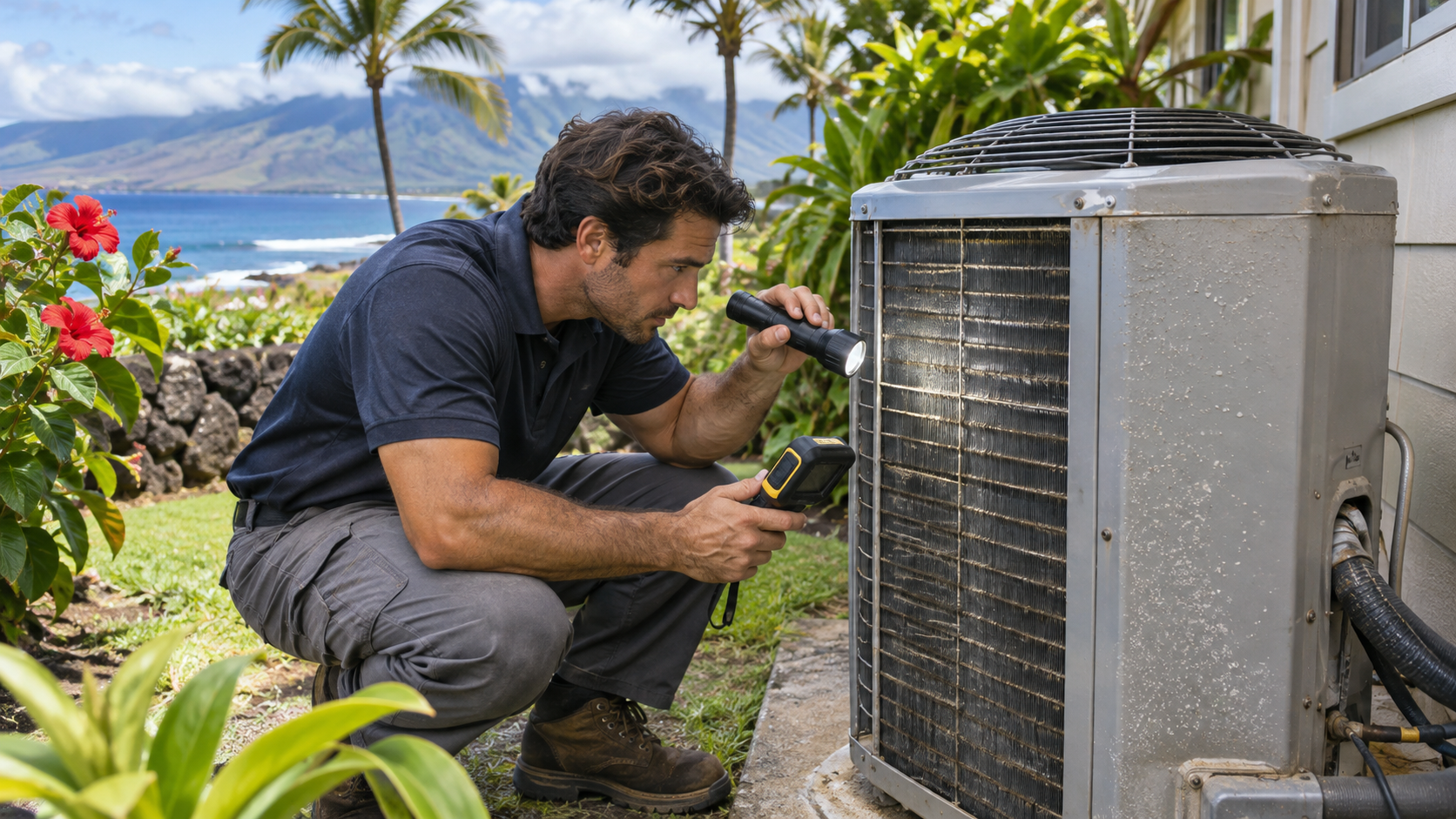
Planning ahead for the worst Mother Nature can throw at you is the best way to protect your AC during a storm on Maui. The outdoor condenser can face wind-blown debris, heavy rain, flooding, and salt-laden air, so preparation should start before a watch or warning is issued. At Certified Air Conditioning Maui, we recommend checking how firmly the unit is mounted, keeping its surroundings clear, and arranging professional help for any anchoring or elevation work that might need to be carried out..
Key Takeaways
- If you’re wondering how to protect your AC during a storm on Maui, then we suggest that you clear away loose items around the unit and ask a licensed HVAC professional to check the unit’s support and fasteners.
- Do not wrap the condenser in a loose tarp because a tight cover can trap moisture, restrict airflow, or come loose in high wind.
- A contractor will assess anchoring and flood exposure before anyone raises or straps an outdoor unit.
- After a storm, look for visible flooding or damage around the unit from a safe distance. If the unit shifted, flooded, or has damaged wiring, leave it off and arrange professional service. If you want help with storm readiness, contact Certified Air Conditioning before severe weather arrives.
How to Protect Your AC During a Storm on Maui?
Start protecting your AC before a storm is close. First, clear the area around the outdoor unit and arrange a professional check of its mounting, electrical connections, and drainage. Getting your AC ready for hurricane season also means scheduling maintenance before severe weather is in the forecast, so you can make sure everything is running efficiently and in tip-top condition.
Before hurricane season or a storm forecast, take these steps:
- Move patio furniture, potted plants, tools, and other loose objects away from the condenser.
- Trim back branches or vegetation that could strike or block the equipment, but do this well before hazardous weather.
- Ask an HVAC professional to inspect the unit’s base, fasteners, refrigerant lines, electrical connections, and clearances.
- Check that nearby drains and the route around the equipment are clear of leaves and debris.
- Take a few photos of the unit and its connections from a safe place so you can compare its condition afterward.
Our Maui AC maintenance service includes checks such as cleaning the outdoor coil, clearing the condensate drain, checking refrigerant pressures, and inspecting mechanical parts on your unit. A scheduled visit before the season kicks off gives you time to address issues before a storm arrives.
Should You Cover an Outdoor AC Unit During a Storm?
Avoid wrapping the outdoor condenser in a loose tarp or plastic sheet. A tight cover can trap moisture, contribute to corrosion in the unit, block airflow, or catch the wind and pull against the equipment causing damage
Some manufacturers allow a breathable seasonal cover or a cover over the top of a unit when it is not operating. That is different from a storm shield. Check the owner’s manual and ask your HVAC contractor before covering any equipment. Never leave a cover in place when the system is running. Also, do not climb or reach around a unit as wind or rain picks up.
A cover also cannot secure the condenser to its base or protect electrical connections from floodwater, so you should focus on those risks first.
Does Your AC Need Anchoring or Elevation?
An outdoor condenser should sit on a stable support and remain secured against movement from heavy winds. If your property faces high winds or flood exposure, ask a licensed professional from Certified Air Conditioning to check whether the existing support, anchors, and equipment location suit the site or need additional security steps.
Do not install improvised straps, drill into the cabinet, or raise the unit on blocks yourself in an effort to secure the unit. The platform must support the equipment safely, keep it level, preserve required service clearances, and allow refrigerant lines and electrical connections to reach properly. The right elevation depends on local flood conditions and the structure. Please remember that a generic height is not a reliable answer for every Maui property.
Have one of our HVAC techs check the unit’s attachment to the base and the base’s attachment to the building or ground. In coastal locations, corrosion-resistant hardware also matters because salt air can quickly start to wear away unprotected metal.
What Should You Do When a Storm Is Near?
Follow official Maui emergency instructions first and keep away from outdoor equipment once conditions become unsafe. Do not go outside to tie down a unit, move a cover, or retrieve items after strong wind or flooding begins.
If you plan to shut down the air conditioner before severe weather, use the manufacturer’s instructions or get advice from your HVAC professional before storm season. Do not touch a disconnect, outlet, or electrical panel if it is wet, surrounded by standing water, or otherwise unsafe to reach. Always stay away from downed lines and damaged electrical equipment.
Secure loose yard items before the storm hits or the weather worsens. If an emergency official gives a different instruction for your area, follow that direction first.
How Does Salt Air Corrosion Affect Your AC on Maui?
Salt air corrosion can wear on the unit’s outdoor coil, cabinet, and metal fasteners of an air conditioner. Maui’s coastal air adds a year-round maintenance concern. A storm spray or wind-driven salt can make exposure more intense for some properties and carry even greater risks.
Keep the condenser clear of leaves and debris. Always watch for visible corrosion or damaged coil fins from a safe distance. Ask your HVAC contractor what cleaning method should be used. Always schedule the equipment maker recommendations for your system and location. Do not use a pressure washer or apply a coating unless the manufacturer approves it. The wrong treatment can damage the coil or affect service.
Certified Air Conditioning notes that Maui’s humidity and salt air can be hard on AC systems and offers maintenance for island homes and businesses. One of our local technicians can inspect for corrosion, clean the coil when appropriate, and identify problems that need repair.
What Should You Check After a Storm?
Wait until officials say it is safe after the storm, then look at the outdoor unit from a dry, stable place. Do not touch the equipment if the floodwater reaches it, wires appear loose, or the ground remains wet around electrical components.
Look for these visible signs:
- The condenser has shifted, tilted, or pulled away from its base.
- Floodwater, mud, sand, or salt debris reached the cabinet or coil.
- Branches, fence pieces, or other objects struck the unit.
- The electrical disconnect, conduit, refrigerant lines, or nearby wiring looks damaged.
- The system makes an unusual noise, gives off an electrical smell, or fails to cool after restart.
If you find any of these signs, keep the system off and call for an inspection. Do not remove the unit’s panels or try to straighten coil fins while the equipment is connected to power. Our team provides A/C repair on Maui for systems that need professional attention after a storm.
If the unit looks undamaged and has stayed dry then follow the manufacturer’s restart instructions. Pay attention to how it sounds and cools. Shut it down and request service if you notice a change or are unsure about its condition.
For help preparing your system before hurricane season or checking it after rough weather, contact Certified Air Conditioning Maui here. Our licensed team is based in Kahului and holds Hawaiʻi contractor license CT-35559.